Cleaner Water Throughout Your Home: Understanding the Benefits of Point-of-Entry Filtration
 Admin
Published
DeskHome Services
Think about how much water flows through your home on an ordinary day. Between morning showers, laundry, cooking, and washing dishes, your household relies on a steady supply of water from morning until night. Yet many people only consider filtration when they’re concerned about what comes out of the kitchen faucet.
Installing point-of-entry water filtration allows homeowners to address specific water quality concerns where the main supply enters the property, rather than relying exclusively on individual filters at separate faucets.
It’s an approach that can make particular sense when water problems affect several areas of the house.
However, before purchasing equipment, it’s worth understanding how centralized filtration works, which substances it can reduce, and whether your household would genuinely benefit from it.
What Happens to Water Before It Reaches Your Faucets?
Water travels through various environments and distribution systems before reaching your home. Along the way, it may collect suspended particles, dissolved minerals, and other substances that influence its appearance, taste, or odor.
Older plumbing can sometimes contribute rust particles, while private wells may contain naturally occurring sediment.
Municipal water supplies may also retain disinfectant-related tastes or odors that some homeowners find unpleasant.
These characteristics don’t always indicate that water is unsafe, but they can make everyday activities less enjoyable.
Perhaps you’ve noticed tiny particles collecting in faucet aerators or an unfamiliar smell when running the shower.
Understanding the source of these concerns through appropriate testing helps determine whether centralized filtration would provide meaningful improvements.
Why Sediment and Carbon Filters Work Well Together
Different water filtration technologies perform different tasks. Combining them can provide a more comprehensive approach when several water quality concerns exist simultaneously.
A properly designed whole-home sediment and carbon filtration system can help capture suspended particles while reducing certain unwanted tastes, odors, and contaminants associated with incoming water.
Sediment filters generally act as an initial treatment stage, trapping materials such as sand, dirt, and rust particles.
Activated carbon works differently. Its porous structure allows certain substances to become attached to its surface through a process known as adsorption.
Together, these technologies can address several common household water concerns while helping protect downstream treatment equipment.
However, neither technology automatically removes every dissolved contaminant or addresses microbial risks.
Selecting filtration media according to water testing results remains essential.
Finding Whole-House Filters That Suit Your Property
Shopping for water treatment equipment can feel overwhelming, particularly when manufacturers advertise numerous filtration stages and performance features.
When comparing residential whole-house filters, homeowners should focus on incoming water conditions, treatment capacity, peak household demand, and verified contaminant reduction capabilities.
A family living in a large property with several bathrooms will likely require different equipment from a couple living in a smaller house.
Filter capacity matters because an undersized system may restrict water flow during periods of high demand.
Consider installation accessibility as well. You don’t want routine cartridge replacement to become an awkward task involving cramped spaces and difficult plumbing connections.
Ask a treatment professional to explain how the recommended equipment matches your household’s requirements.
A straightforward explanation can be considerably more valuable than an impressive sales brochure.
Enjoying Better Water Beyond the Kitchen
One of the appealing aspects of centralized filtration is that its benefits aren’t necessarily limited to drinking water.
Depending on the equipment selected, homeowners may notice fewer suspended particles reaching bathroom fixtures, reduced unwanted odors during showering, or more enjoyable water for preparing meals.
Having appropriately treated water throughout connected household plumbing also eliminates the inconvenience of maintaining multiple individual faucet filters.
Think about a busy household where everyone is getting ready for work or school. Nobody wants to worry about whether a particular faucet has a functioning filter.
A centralized arrangement can simplify these everyday routines.
Of course, results depend on the original water conditions and the treatment equipment’s actual capabilities. Establishing realistic expectations before installation is important.
Does Whole-House Filtration Also Address Hard Water?
This is a question that frequently surprises homeowners.
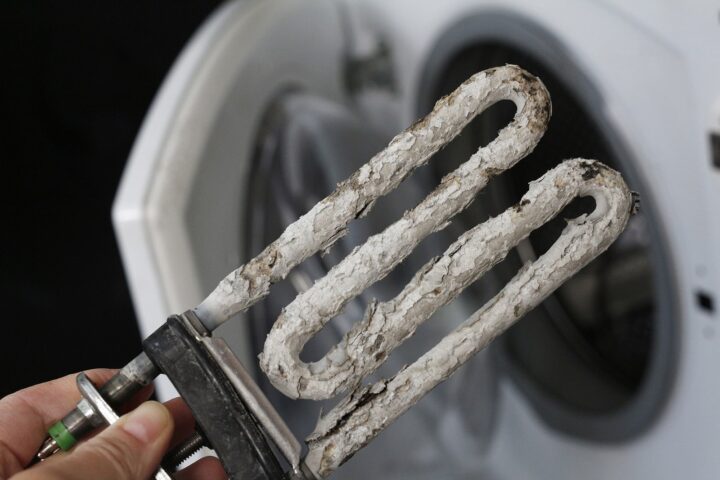
Ordinary sediment and carbon filters aren’t designed to remove dissolved calcium and magnesium, the minerals primarily responsible for water hardness.
If you’re constantly dealing with chalky deposits around faucets or frequent kettle descaling, separate hardness treatment may be necessary.
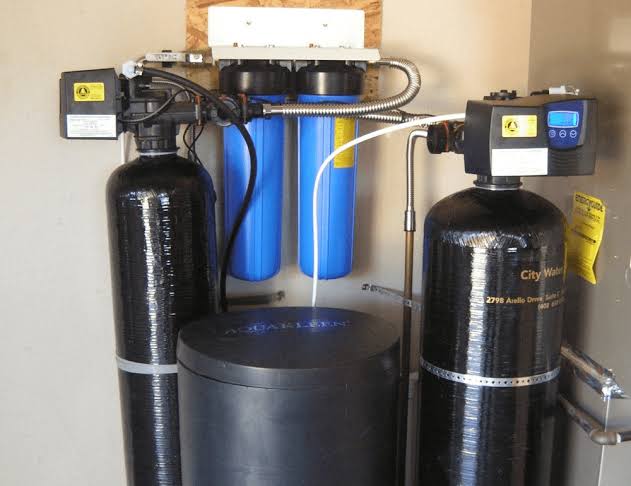
Conventional water softeners use ion exchange to reduce these minerals, helping limit future scale formation.
Some properties benefit from combining filtration and softening because their incoming water presents multiple concerns.
Rather than assuming one device can resolve everything, consider how different technologies might work together.
A carefully planned treatment arrangement can offer better practical value than purchasing equipment that doesn’t address the underlying problem.
Keeping Your Filtration System Performing Effectively
Water filters quietly do their job in the background, which makes them easy to forget about once installed.
Over time, sediment cartridges collect debris, while activated carbon media lose their treatment capacity.
Following manufacturer recommendations for replacement and servicing helps maintain effective filtration and suitable water flow.
Before purchasing equipment, ask about replacement filter costs, maintenance intervals, and component availability.
Periodic testing is particularly important for private well owners and households treating potentially harmful contaminants.
Remember that clearer-looking or better-tasting water isn’t necessarily proof of drinking water safety.
Keeping a simple maintenance schedule can help protect your investment without adding unnecessary complications to household life.
A Practical Improvement for Long-Term Household Comfort
Improving water quality throughout your home doesn’t need to be complicated.
Begin with reliable testing, understand which concerns require attention, and choose filtration equipment suited to your property’s actual needs.
With thoughtful installation and consistent maintenance, centralized filtration can make familiar household activities more pleasant and convenient.
Sometimes, the most valuable home improvements aren’t particularly noticeable to visitors. They’re the everyday conveniences you gradually come to appreciate, from preparing breakfast to taking a relaxing shower after a long day.