Understanding Reverse Osmosis for Better Drinking Water in Port Richey
 Admin
Published
DeskHome Services
Admin
Published
DeskHome Services
There’s something comforting about turning on the kitchen faucet and knowing the water coming out is clean, fresh, and pleasant to drink. Yet for many homeowners, water quality is something they only think about when the taste changes, an odd smell appears, or mineral spots start showing up around the sink. In Port Richey, choosing the right drinking water treatment can make everyday routines feel a little easier.
Reverse osmosis has become a popular option for households that want an additional level of filtration for drinking and cooking water. It’s not a magic wand, and it isn’t automatically the right answer for every home. But when properly selected and maintained, an RO system can provide consistently treated water right where it’s needed most.
What Exactly Is Reverse Osmosis?
Reverse osmosis is a filtration process that uses pressure to push water through a semipermeable membrane. The membrane allows water molecules to pass while reducing many dissolved substances and impurities.
That sounds technical, but the basic idea is fairly simple. Think of the membrane as an extremely fine barrier. Water gets pushed through it, while many unwanted dissolved materials are separated from the treated water.
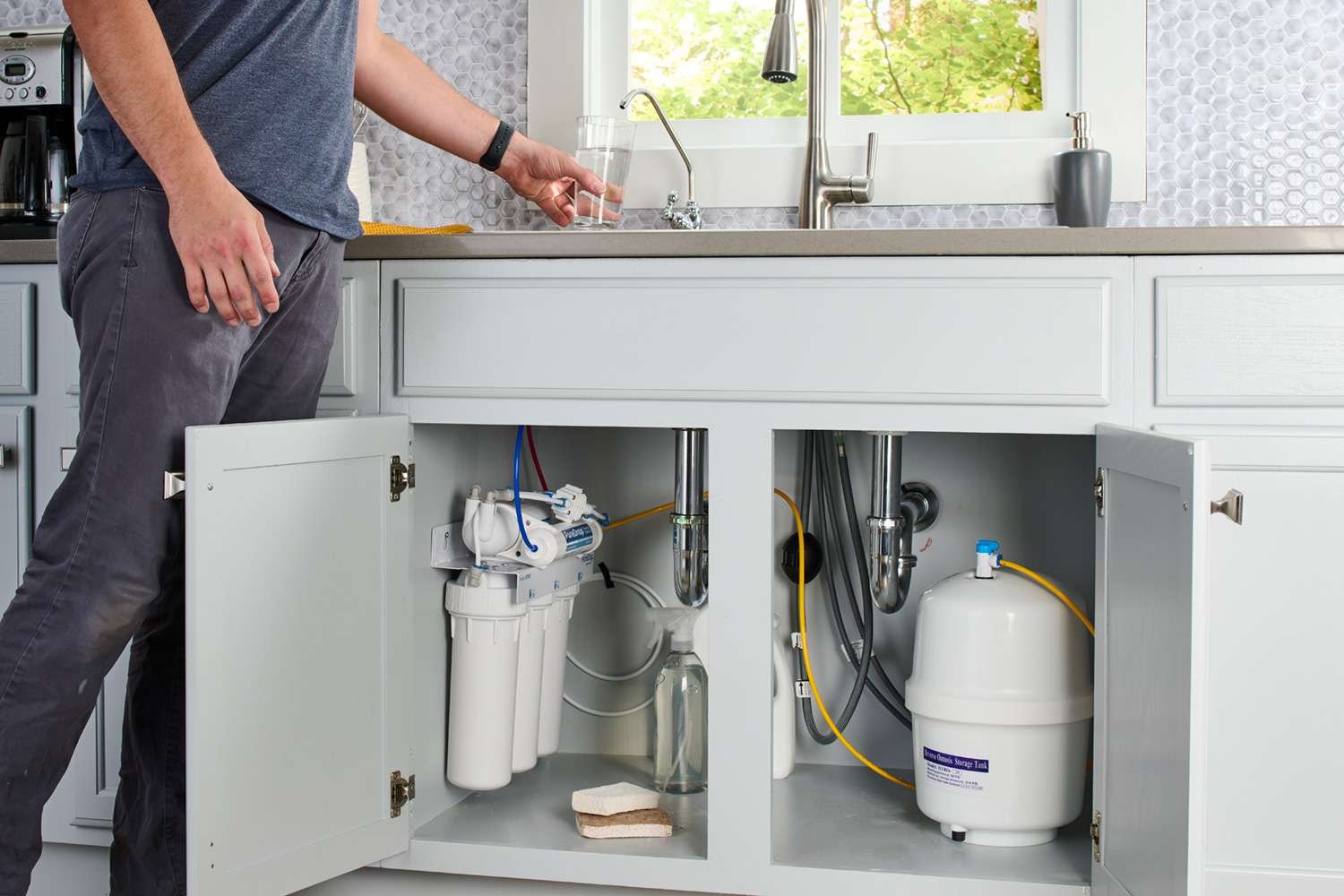
Unlike a basic carbon filter, an RO system typically uses several stages of treatment. Depending on the system, these can include sediment filtration, carbon filtration, the RO membrane itself, and a final polishing filter.
Why Homeowners Consider RO Systems
Taste is often the first thing people notice. Water treated through reverse osmosis can have a cleaner, fresher taste, which may make a difference in everything from morning coffee to cooking rice.
There are practical reasons, too. If your household drinks plenty of water, having a dedicated treated-water faucet in the kitchen can be convenient. You don’t have to constantly refill a pitcher or remember whether the filter inside it needs replacing.
When comparing the best reverse osmosis systems in Port Richey, homeowners should look beyond advertising claims. Consider the system’s filtration stages, capacity, installation requirements, replacement-filter costs, and the type of water-quality issue it is designed to address.
RO Is Different From a Water Softener
One common source of confusion is assuming that reverse osmosis and water softening are basically the same thing. They’re not.
A water softener is primarily designed to address hardness minerals, particularly calcium and magnesium. Reverse osmosis, meanwhile, is designed to reduce a broader range of dissolved substances through membrane filtration.
Because they solve different problems, some homes may benefit from both technologies. A softener can help protect plumbing and water-using appliances from hardness-related scale, while RO can provide specially treated water for drinking and cooking.
It’s less about choosing the “best” technology and more about figuring out what your household water actually needs.
The Importance of Pre-Filtration
The RO membrane is an important part of the system, but it shouldn’t be expected to do all the work alone. Pre-filters can help remove sediment and reduce chlorine before water reaches the membrane.
This matters because membranes have specific operating requirements. Sediment can interfere with performance, while chlorine may damage certain types of RO membranes.
A properly designed system therefore works as a team. Each stage has a particular job, and the combination helps the system operate more effectively.
Choosing a Reliable Local Provider
Buying equipment is only one part of the process. Installation, system sizing, filter replacement, troubleshooting, and long-term service all matter.
A reputable Port Richey reverse osmosis company should be able to explain how the system works without drowning you in technical language. You should know what the system is intended to reduce, where it will be installed, how much treated water it can produce, and what maintenance will be required.
Good service also means being honest when a different treatment method would make more sense. Not every water concern requires an RO system, and a trustworthy professional should be comfortable saying that.
What About Water Waste?
Water efficiency is another factor worth considering. Traditional RO systems can send some water to drain during the purification process. The exact amount varies depending on system design, water pressure, membrane condition, and other factors.
Modern systems may include features designed to improve efficiency. When comparing models, ask about their recovery or waste ratio rather than focusing only on the purchase price.
A slightly more efficient system could make sense over several years, particularly for a household that uses RO-treated water frequently.
Maintenance Shouldn’t Be an Afterthought
Even an excellent filtration system needs attention. Filters have a service life, and the RO membrane eventually needs replacement. Waiting until water tastes strange or production slows dramatically isn’t the best maintenance strategy.
Keeping a simple replacement schedule can help. Mark filter-change dates on a calendar, save the model numbers of replacement cartridges, and pay attention to changes in taste, flow, or odor.
Professional servicing can also be useful when you’re unsure whether the system is operating properly.
Where RO Fits Into Daily Life
The beauty of a drinking-water system is that it becomes almost invisible once it’s installed. Fill a glass. Make soup. Brew coffee. Wash vegetables. It’s just part of the kitchen routine.
For many homeowners, RO drinking water systems in Port Richey can provide a convenient way to add another level of treatment specifically where drinking and cooking water is used most.
That targeted approach can also be practical. Instead of treating every gallon entering the house with the same level of filtration, homeowners can use different technologies for different purposes.
Making a Smart Choice for Your Home
Choosing an RO system doesn’t need to become an exhausting research project. Start by understanding your water. Testing can provide useful information about hardness, dissolved solids, pH, and other characteristics that may influence which treatment approach makes sense.
Then consider your household habits. How much water do you drink? Do you cook frequently? Do you want a dedicated faucet? Are replacement filters readily available? What kind of maintenance are you comfortable handling?
These questions may seem small, but together they can point you toward a system that fits your actual life instead of one that simply looks impressive on a product page.
A Cleaner Glass of Water Starts With the Right Approach
Reverse osmosis can be a valuable tool for homeowners who want additional treatment for drinking and cooking water. But the best results come from matching the technology to the water-quality situation, installing it correctly, and keeping up with routine maintenance.
For Port Richey households, the goal shouldn’t be to buy the most complicated system available. It should be to find a dependable solution that works quietly in the background and delivers water your family is happy to drink.
After all, good water treatment isn’t about making life more complicated. It’s about making one of the simplest things we do every day — filling a glass of water — feel a little more reassuring.