Cleaner Water at Home: How Modern Filtration Fits Into Everyday Life
 Admin
Published
DeskHome Services
Admin
Published
DeskHome Services
Most people don’t think much about the water coming from their kitchen tap until something feels off. Maybe there’s a strange taste in the morning coffee. Perhaps the ice cubes smell faintly of chlorine, or a glass left on the counter develops a cloudy look. Sometimes, nothing seems wrong at all — but you still wonder what’s actually in that water.
That’s where home filtration and water treatment can make a real difference. The goal isn’t simply to make water taste better. A properly selected system can reduce certain unwanted substances, improve consistency, and give households more confidence in the water they use every day.
Still, choosing the right solution can be confusing. There are pitchers, faucet filters, whole-house systems, softeners and reverse osmosis units. They don’t all do the same job, and buying the most complicated option isn’t automatically the smartest move.
Start by Understanding Your Water
Before choosing a filtration system, it helps to understand the water you already have.
Municipal water and private well water can have very different characteristics. City water may contain disinfectants such as chlorine, while well water can have elevated minerals, sediment, iron or other naturally occurring substances. Even within the same area, water quality can vary from one property to another.
A basic water test is often the best starting point. It can reveal issues that aren’t obvious from taste or appearance. Hardness, pH, iron, sediment and other factors can help determine what kind of filtration actually makes sense.
There’s also a practical benefit to testing first: you avoid spending money on equipment that solves a problem you don’t really have.
Why Reverse Osmosis Is Popular in Kitchens
Reverse osmosis has become a common choice for households that want highly filtered drinking and cooking water. The process uses pressure to push water through a semipermeable membrane, separating many dissolved substances from the water.
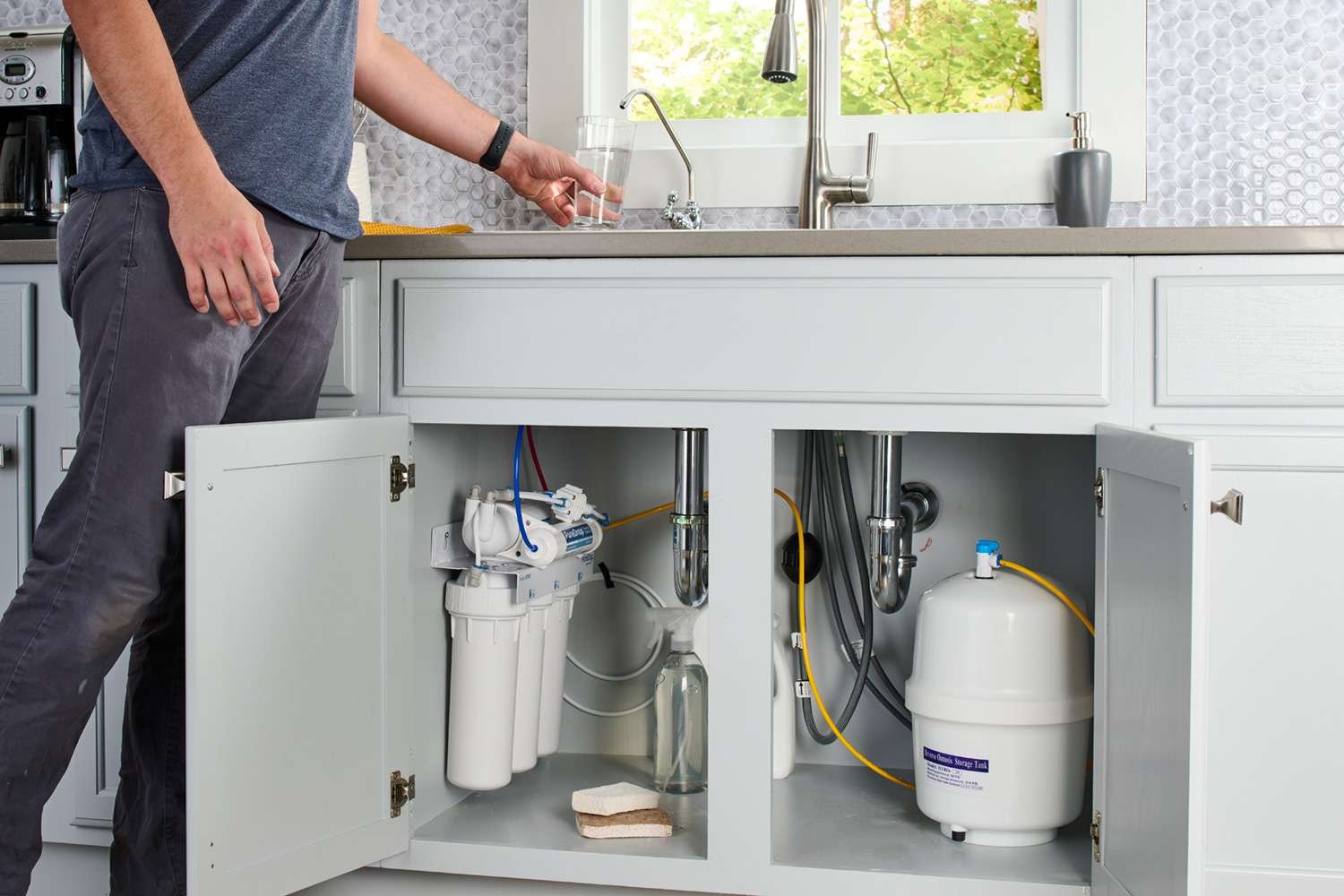
A kitchen-based under sink reverse osmosis system is particularly convenient because it sits out of sight beneath the counter. A dedicated faucet delivers filtered water without requiring the entire home’s plumbing to be treated.
That makes it useful for drinking, preparing meals, making coffee and filling water bottles. You don’t necessarily need highly filtered water from every shower or toilet, after all.
However, reverse osmosis isn’t a one-size-fits-all answer. Systems may use several filtration stages, including sediment and carbon filters, before water reaches the membrane. Some also include a final polishing filter or remineralization stage. Maintenance matters, too. Filters need to be replaced on schedule, and the system should be installed correctly.
Taste Is Only Part of the Story
One of the first things people notice after installing filtration is taste.
Water can carry subtle flavors from minerals, disinfectants or plumbing materials. Once those flavors are reduced, coffee may taste cleaner, cooking water may seem fresher, and drinking from the tap can become more appealing.
But taste shouldn’t be the only reason to choose a system.
The more important question is what the equipment is certified and designed to reduce. Different technologies target different contaminants. Carbon filtration, for example, is commonly used for improving taste and reducing certain chemicals, while reverse osmosis can reduce a broader range of dissolved substances.
This distinction is easy to overlook. A filter that works brilliantly for chlorine may not be designed to address every other concern in your water.
Where Purified Water Makes the Most Sense
Not every household needs to filter every drop that enters the property. In many cases, it makes more sense to focus on the water used for drinking and cooking.
That’s where purified water can become part of a practical daily routine. A dedicated filtration system can provide convenient access at the kitchen sink, reducing reliance on single-use bottled water.
There’s a lifestyle advantage here, too. When clean-tasting water is readily available, people are often more willing to refill a reusable bottle instead of grabbing another plastic one from the refrigerator or store.
For families, the convenience adds up quickly. Parents can fill bottles before school, prepare baby formula according to appropriate guidance, or use filtered water for soups and other recipes without thinking twice about it.
Whole-Home Filtration vs. Point-of-Use Systems
The best filtration setup depends heavily on what you’re trying to accomplish.
A point-of-use system treats water at a specific location, usually the kitchen. It’s often a good choice when the main priority is drinking and cooking water.
Whole-home filtration works differently. It treats water as it enters the house, allowing filtered water to flow through multiple fixtures. This can be useful when water quality concerns affect bathing, laundry, appliances or general household use.
For example, if sediment repeatedly clogs fixtures or unpleasant odors are noticeable throughout the house, a kitchen-only filter may not address the underlying issue.
On the other hand, installing a whole-house system when your only concern is drinking water could be unnecessary. It all comes down to the water problem, the household’s priorities and the available budget.
Don’t Forget About Hard Water
Filtration and water softening are often confused, but they solve different problems.
Hard water typically contains higher levels of calcium and magnesium. These minerals aren’t necessarily a sign that water is unsafe, but they can cause scale buildup inside pipes and appliances. You may also notice spots on dishes, soap that doesn’t lather easily, or a rough feeling after showering.
A water softener is designed specifically to address hardness. It shouldn’t be viewed as a replacement for every type of filtration system.
Some homes benefit from using both technologies: a whole-home softener for hard water and a drinking-water filtration system in the kitchen. It sounds like a lot of equipment, but when each system has a clear job, the setup can be surprisingly straightforward.
Maintenance Is Where Good Systems Prove Their Worth
Even the best filtration equipment needs attention.
Filters gradually collect or adsorb unwanted substances, and their effectiveness can decline when they’re used beyond their recommended service life. Membranes and other components also require periodic inspection, depending on the system.
Keep a simple replacement schedule. Set a reminder on your phone if necessary. It’s one of those boring little household jobs that’s easy to forget until water quality or flow changes.
Installation quality matters as well. Poor connections can cause leaks, while incorrect filter selection can leave you with equipment that doesn’t address the actual water issue.
A Smarter Way to Choose
The smartest approach isn’t to chase the newest filtration technology or buy the biggest system available. Start with the water itself.
Test it. Identify the specific concerns. Decide which water needs treatment and where. Then choose technology that matches those needs.
A reliable professional can also help interpret test results and explain what different systems can and cannot remove. That’s especially useful when water chemistry is complicated or when a property relies on a private well.
In the end, better water doesn’t have to mean a complicated household project. The right system should quietly do its job in the background — giving you water that tastes better, fits your needs and feels dependable day after day.
And honestly, that’s probably what good home technology should do: work well enough that you don’t have to think about it very much.